What a Water Repellent Does for Brick and Stucco, and What It Can't
A repellent protects a sound wall; it doesn't repair an unsound one.
October 16, 2026 · 4 min read
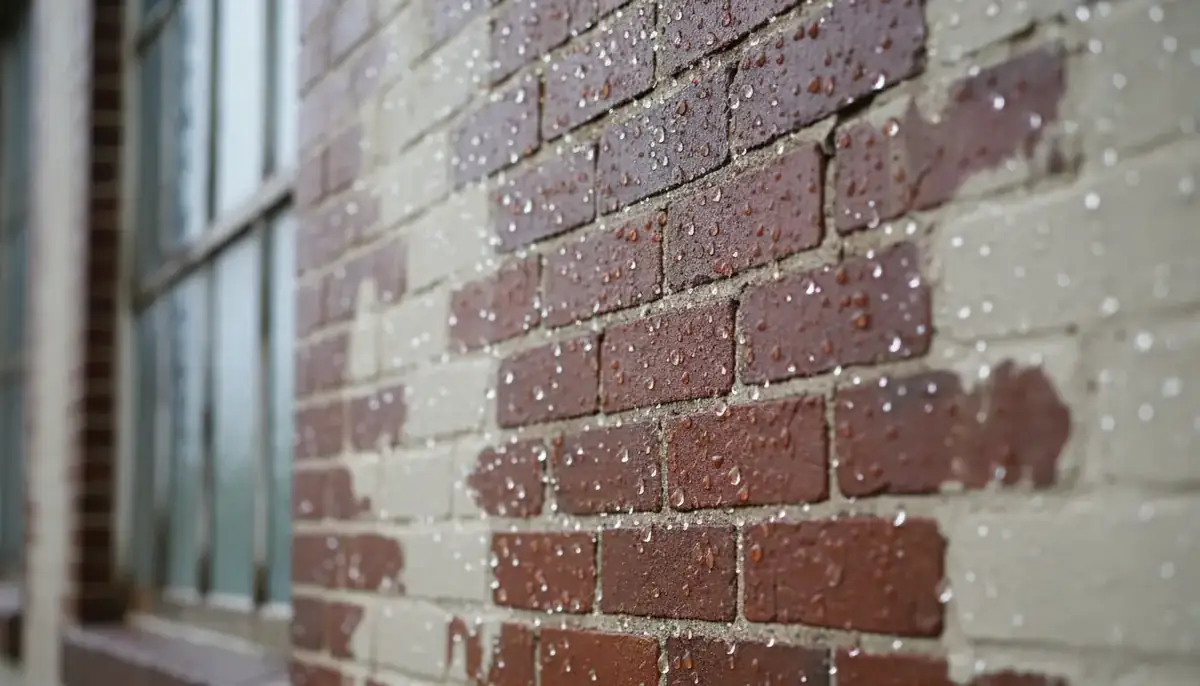
Brick, stucco, and concrete look solid, but they're porous. A rainy week soaks into them like a sponge, and a wall that stays damp deteriorates. Paint lets go. Salts show up as white crust. Stucco stains. The moisture works its way toward the inside. A water repellent is a treatment for that problem, and it's also one of the most misunderstood tools in the trade, because people expect it to fix things it can't.
What a repellent does
A penetrating water repellent soaks into the surface and lines the tiny pores, so rain beads and runs off instead of being absorbed. Done right, the wall doesn't look any different. There's no shiny film. That's the point Paramount makes on its own service page: protecting exterior surfaces from moisture without affecting their appearance. A treated wall also tends to stay cleaner, because less water carries dirt and algae into the surface.
Unlike paint or a thick coating, a good repellent lets the wall breathe. Moisture vapor from inside the building can still pass outward. That matters on older masonry, where trapping moisture inside does more harm than letting it out.
What it can't fix
A repellent treats the surface of sound material. It does not bridge a gap. If a mortar joint is open, a crack runs through the stucco, or a sealant bead has pulled away at a window, water will go in there no matter how well the brick face beads. Applying a repellent over open defects can even hide the evidence for a while, because the face looks dry and protected while the water keeps getting in through the openings.
These are the things to deal with first:
- Mortar joints that are recessed, crumbling, or missing, which call for tuckpointing.
- Cracks in stucco and concrete, which need to be opened up and repaired.
- Failed sealant at windows, doors and expansion joints, which needs to be cut out and replaced.
- Loose paint, salt deposits and biological growth, which need to be cleaned off so the repellent can enter the surface.
- Flashing, gutters and drainage that dump water onto the wall.
That last one gets overlooked. A wall can only shed so much water. If a gutter overflows onto the same stretch of brick every storm, the right repair is the gutter, and the repellent comes afterward.
The order of work
The sequence is repair, clean, dry, then treat. Repair the joints, cracks and sealant. Clean the surface so the repellent isn't sitting on dirt. Let the wall dry, because a saturated wall can't take up the treatment. Then apply the repellent across the whole elevation so it protects evenly. The repellent goes on last for a simple reason: it protects work that's already been done right.
Skipping steps is where disappointment comes from. A building owner who treats a leaking wall with a repellent and still sees stains after the next storm will often conclude that repellents don't work. In most cases the repellent did its job on the face, and the water was coming in somewhere the repellent was never going to reach.
Where it fits in a real project
On Paramount's project list, The National Rice Mill is a good example of the sequence: masonry and stucco facade remediation, tuckpointing and masonry repair, window glazing and caulking, and water repellent application. The Holiday Inn on the Westbank Expressway in Gretna involved remediating the stucco facade, glazing and caulking the windows, and applying a waterproof coating to the entire exterior. In neither case is the surface treatment the headline. It's the final layer on a wall that's been made sound.
Windows, doors and concrete
Paramount's service list includes repellent application around windows and doors, where a wall takes its most concentrated water, and a waterproof coating for concrete surfaces. Concrete takes on water too, particularly horizontal surfaces and walls that sit in shade and stay damp. Whether a repellent or a coating is the right product depends on the surface and what it has to do. A site visit sorts that out faster than guessing from the sidewalk.
How to tell whether a wall needs attention
Watch the wall after rain. Sound, treated surfaces bead water and dry evenly. Untreated or worn ones darken and stay dark. If you see one patch that stays wet long after the rest of the wall has dried, something is feeding it: an open joint, a leaking gutter, a crack, or a failed bead of sealant. That patch is your repair list.
Streaks below windows, green growth at the base of the wall, and white crust on brick are the other usual clues. They all say the same thing: the wall is taking on more water than it can shed.
What to ask a contractor
- What will you repair before the repellent goes on?
- How will you check that the wall is clean and dry before you treat it?
- Will the treatment change how the wall looks?
- Which elevations and details, such as window surrounds, are in the scope?
A contractor who answers those questions plainly is thinking about the whole wall and not just the last coat. Paramount's water repellent application page lists the surfaces and details it treats. To talk about a building, call 504-723-4112.
Paramount Waterproofing Solutions, 504-723-4112
Call 504-723-4112More articles
When the Mortar Washes Out of an Old Brick Building
The brick gets the credit, but the mortar is what keeps rain out of an old wall.
Why the Sealant in Your Expansion Joints Keeps Failing
A joint is a deliberate gap in the building, and the sealant is the only thing standing between that gap and the weather.