When the Mortar Washes Out of an Old Brick Building
The brick gets the credit, but the mortar is what keeps rain out of an old wall.
October 16, 2026 · 4 min read
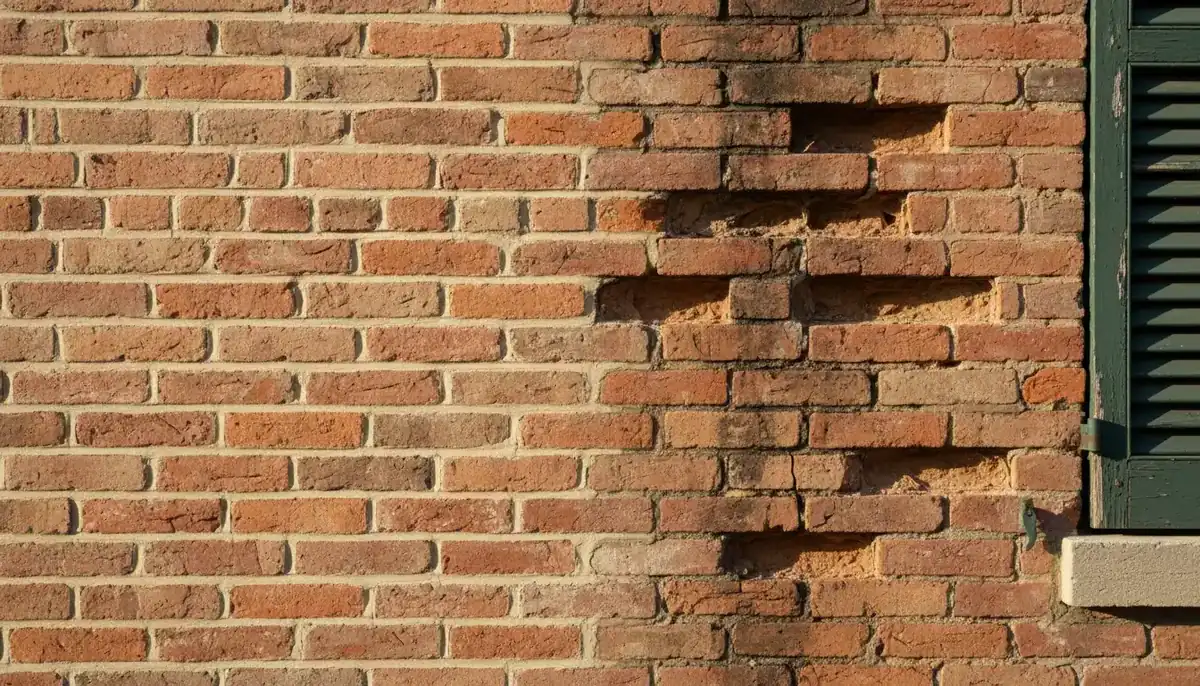
Walk any older block in New Orleans and you'll see brick buildings that have stood through more storms than anyone can count. The brick gets the credit. The mortar does the quiet work. Those thin lines between the bricks hold the wall together, spread its weight, and keep rain from finding a straight path inside. When the lines start to disappear, the wall is losing its first defense.
What happens when the joints wash out
Old mortar is softer than the brick around it, and that's by design. It's meant to give a little so the brick doesn't crack. The tradeoff is that mortar wears. Rain runs down the face of the wall, wind drives it sideways, and the sun bakes the surface dry again day after day. Over a long stretch the joints erode back from the face. You can often spot it from the sidewalk: the mortar sits recessed, looks sandy, or crumbles when you press it with a fingertip.
Once a joint is open, water doesn't have to soak through solid masonry anymore. It runs into the gap and keeps going. Inside the wall it can reach steel lintels, wood framing, plaster, and insulation. It can also travel sideways before it shows itself, which is why a stain on an interior wall in a third-floor unit sometimes traces back to a joint on a different elevation entirely.
Wet brick suffers on its own, too. A wall that stays damp for long stretches can lose the face of its bricks in flakes, a failure called spalling. Salts carried by the water leave a white crust on the surface. Brick that was perfectly sound starts to go soft, and the repair that would have been small becomes a bigger one.
What tuckpointing is
Tuckpointing is the repair for failing mortar joints. The crew grinds or rakes out the loose, deteriorated mortar to a sound depth, cleans the dust and debris out of the joint, and packs in fresh mortar. The joint is then finished so it sheds water and, on many historic walls, so the new work reads as part of the original. Paramount describes it as creating a fine line between the mortar and the bricks, which is what prevents water intrusion.
Two things separate real tuckpointing from a cosmetic patch. The first is depth. Smearing new mortar over the surface of a crumbling joint looks tidy for a season and then falls off, because it never bonded to anything. The old material has to come out first. The second is the match. Mortar that's harder than the old brick can force the brick to take the stress, and then the brick cracks at its edges. The new mortar has to suit the wall it goes into, which matters most on older buildings.
Signs your building needs a look
- Mortar that sits recessed well back from the brick face, or that crumbles to sand when you press it.
- Hairline cracks that follow the joints in a stair-step pattern.
- Brick faces that are flaking, soft, or shedding fragments at the base of the wall.
- White powdery deposits on the wall after rain.
- Damp patches, peeling paint, or stains on interior walls that line up with an exterior brick wall.
- Moss or small plants taking hold in the joints.
Why it comes before the rest of the work
Tuckpointing comes early in a restoration for a simple reason: everything else rests on a sound wall. A water repellent applied over open joints does very little, since the water still has an open door. Paint over failing mortar peels. Sealant at a window head can't hold if the brick above it is moving. Repoint first, clean, and then decide what else the wall needs.
That sequence shows up in the scopes Paramount lists for its own projects. At The National Rice Mill on Montegut Street, the facade work included tuckpointing and masonry repair, along with window glazing and caulking and a water repellent application. At St Charles Avenue Baptist Church, the exterior work covered masonry cleaning, cast stone repointing, waterproofing, replacing rusted metal lintels over doors, and reglazing deteriorated windows. Different buildings, same idea: stop the water at the joints, then protect everything around them.
Historic buildings add a step
In New Orleans, a lot of the buildings that most need tuckpointing are historic, and that changes the job. Material, joint profile, and color all matter, and some work needs approval before it starts. Jan C., whose condominium association worked with Paramount, wrote that many of the jobs needed PRC/HDLC approval because the buildings are historic, and that the crew met all of the requirements without a problem. If your building sits in a historic district, ask what approvals apply before anyone sets up a scaffold.
Getting a wall assessed
A walk around the building with someone who reads masonry for a living is the cheapest first step. Look at the joints at street level and at the parapet, because the top of a wall takes the most weather. Look under windows and below roof edges, where water runs. Photograph what you find so you can compare it the next time you look.
Paramount offers a complimentary site visit for historic masonry work. If you manage an older brick building and you've noticed soft joints, stains, or flaking faces, see Paramount's historic masonry restoration page for the full scope, then call Albert Bikbulatov's team at 504-723-4112.
Paramount Waterproofing Solutions, 504-723-4112
Call 504-723-4112More articles
Why the Sealant in Your Expansion Joints Keeps Failing
A joint is a deliberate gap in the building, and the sealant is the only thing standing between that gap and the weather.
What a Water Repellent Does for Brick and Stucco, and What It Can't
A repellent protects a sound wall; it doesn't repair an unsound one.