Keynote E · Division 07 Water Repellents
Water Repellent Application
Repellent on brick, stucco and concrete and around windows and doors, so a New Orleans wall sheds rain without changing how it looks.
Brick that drinks rain, and what it does to the wall
Brick, stucco, stone and concrete are porous. In a humid city with as much rain as New Orleans, an untreated wall takes on water every time the weather turns, and that water has somewhere to go. It carries salts out to the surface as white efflorescence, works into hairline cracks, and over the years leads to spalling and erosion.
Moisture held inside a wall also feeds mold and mildew in the cavity, which is damage nobody sees until it reaches the plaster or the paint inside.
A water repellent changes how the surface behaves. Paramount describes the job as protecting exterior surfaces from moisture without affecting their appearance, so a historic brick front or a new stucco wall keeps the face it has and stops soaking up the storm.
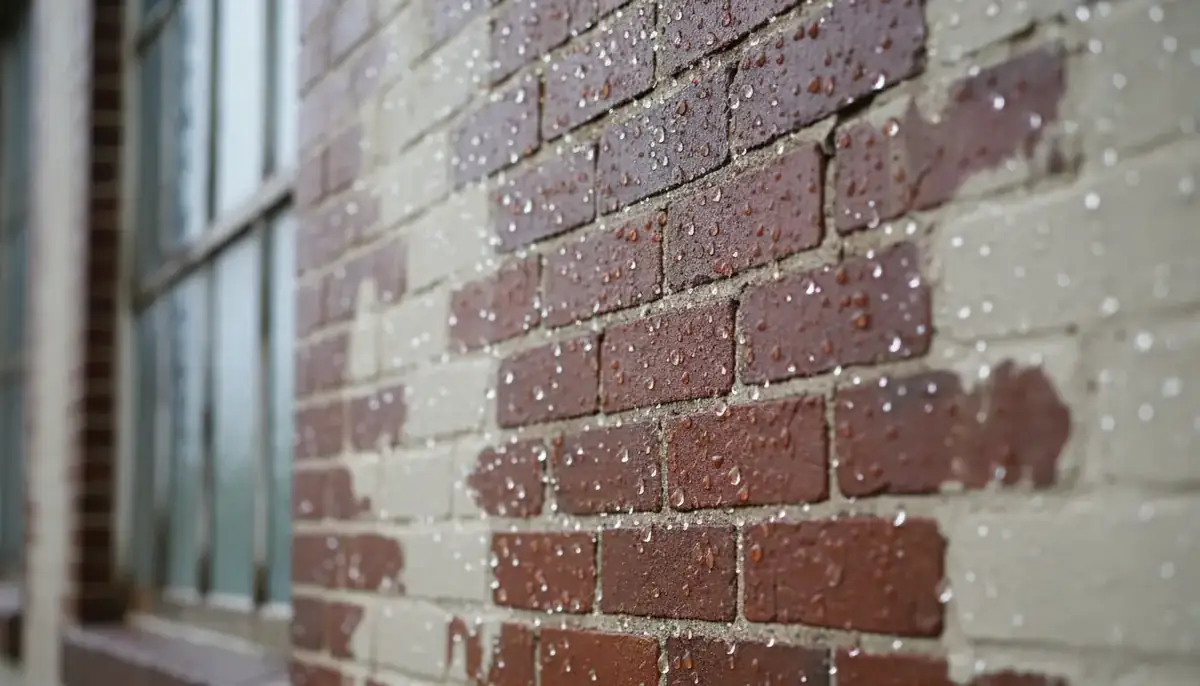
Rain beading on treated red brick and pale stucco beside a steel window
From window reveals to concrete walkways
Paramount applies repellent around windows and doors, where gaps and open edges are the most common ways water gets in, and across full brick and masonry walls. Stone, stucco and concrete get the same protective barrier so water stays on the outside of the wall.
Waterproof Coating for Concrete Surfaces covers the flat and vertical concrete a building is made of: walls, floors and walkways that stand in weather every day and wear down faster once water gets into them.
The listed projects show the range. The National Rice Mill at 522 Montegut Street included masonry and stucco façade remediation, tuckpointing, masonry repair, window glazing and caulking, and water repellent application. At the Holiday Inn on the Westbank Expressway in Gretna the scope ended in a waterproof coating over the entire exterior.
Repair first, repel last
Order matters on a wall. A repellent goes on last, over masonry that is sound, clean and dry. Open mortar joints are repointed first, failed caulk around a window is replaced, and cracked or spalled brick is repaired. A repellent is not a patch for any of those, and a wall with an open joint will still leak behind a perfect coat.
At The National Rice Mill, the published scope lists water repellent application alongside tuckpointing, masonry repair, and window glazing and caulking, which is the usual shape of this work: the wall is made sound, then protected. It is also why an estimate starts with a walk around the building rather than a number.
If a wall in New Orleans is staining white, darkening after every rain, or leaking at a window head, call or text 504-723-4112 and describe what you are seeing. Paramount calls back to set up a visit.
At The National Rice Mill, 522 Montegut Street, Paramount's scope ran from tuckpointing and masonry repair through window glazing and caulking to water repellent application.