Keynote A · Division 07 Moisture Protection
Commercial Waterproofing Services
Coatings and membranes over the whole roof, below-grade waterproofing for basements and parking garages, and sealed expansion joints, done on New Orleans buildings that stay open.
Where a commercial building in New Orleans takes on water
A commercial building is wet from three directions at once. Rain lands on flat roofs and parapets. Groundwater presses on basement walls and parking garage levels. And the joints that let a large structure move become open seams the day their sealant gives out.
Paramount's own commercial page is blunt about what follows once water gets in: mold growth, weakened walls and expensive repairs. Foundation sealing, roof waterproofing, below-grade waterproofing and expansion joint sealing each answer one of those entry points, so the first job is finding which one your building actually has.
Albert Bikbulatov, M. Eng, founded Paramount in 2011 and works with architects, engineers and building envelope specialists on exactly these problems. Work in New Orleans starts with an inspection to find where the water is coming in, then the system is matched to the building. Call or text 504-723-4112 to start that conversation.
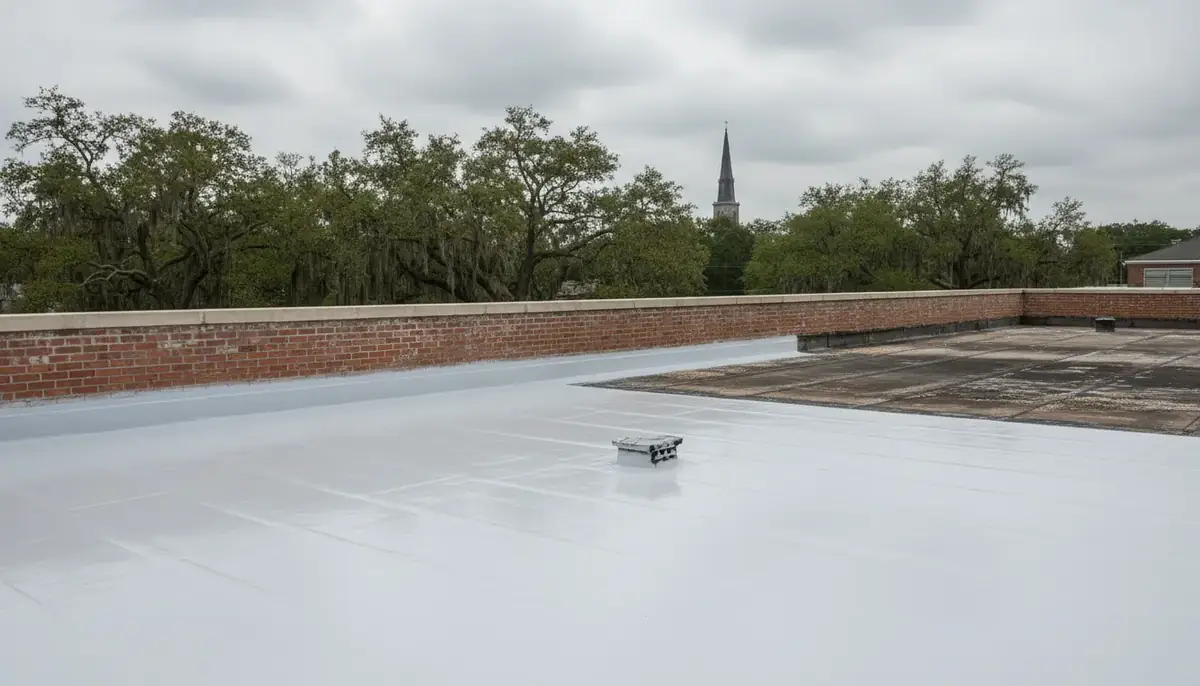
Pale grey fluid-applied membrane across a flat roof at a brick parapet
Roof Waterproofing: one continuous surface, edge to edge
Roofs are among the most exposed parts of any commercial building. Water finds cracks, joints and damaged areas, then leaks into the structure below. Roof Waterproofing here means coatings and membranes that cover the entire surface, so the roof reads as one layer instead of a patchwork of repairs.
The New Orleans Convention Center, 900 Convention Boulevard, is on Paramount's project list for a fluid applied waterproofing system installation. A fluid applied system goes on wet and cures in place, which lets it wrap drains, pipe penetrations and the foot of a brick parapet without lap seams to fail later.
On the building elevation this is keynote A: the parapet, the flashing line and the membrane are one assembly, and the roof expansion joints are part of it. Sealing them in the same pass means the finished surface still holds up where the roof moves.
Below-Grade Waterproofing and Expansion Joints Sealing, with the doors still open
Below-Grade Waterproofing protects the parts of a building under ground level, basements and parking garages, where water collects and moisture problems or flooding follow. This is the one place where the water pushes back, so the barrier has to be continuous.
Expansion Joints Sealing keeps the movement joints watertight. Temperature and pressure make a building shift, the joint allows it, and an unsealed joint becomes an entry point. Sealing them stops leaks through the seams most owners never think to check.
Most of this work happens on buildings that stay in use. Paramount's remediation of the Holiday Inn on the Westbank Expressway in Gretna covered the stucco facade, window glazing and caulking, and a waterproof coating over the entire exterior, and it was completed without interruption of the business. A rental property owner, Carolyn G., wrote that her tenants were not interrupted or disturbed in any way.
New Orleans Convention Center, 900 Convention Boulevard: fluid applied waterproofing system installation, from Paramount's own project list.