Keeping Balconies and Pool Decks Watertight and Slip Resistant
A deck coating has two jobs, keeping water out and keeping feet from sliding, and both depend on what happens before the coating goes on.
October 16, 2026 · 4 min read
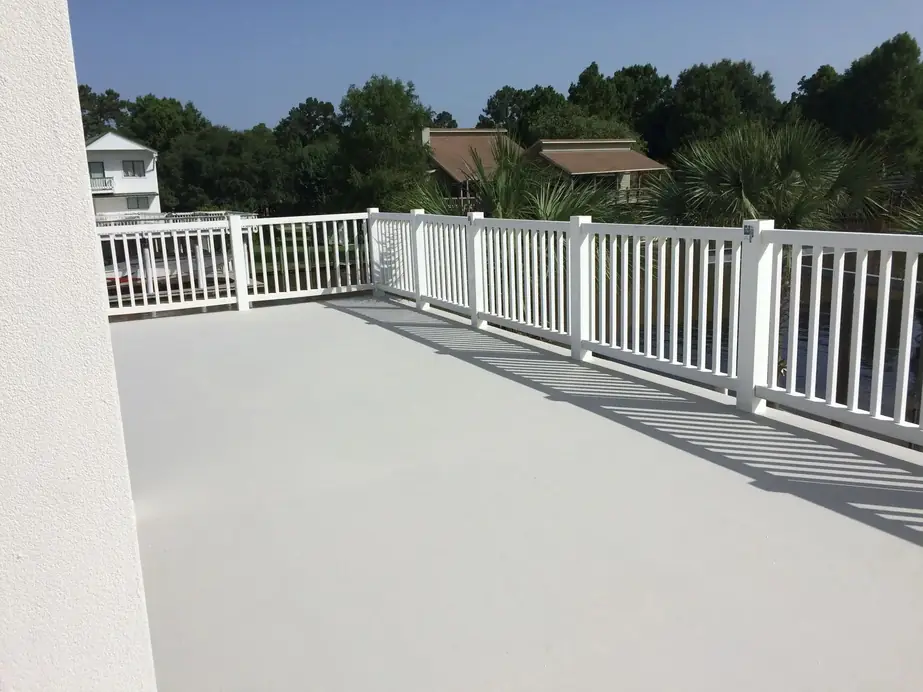
A balcony, gallery, or pool deck is a roof that people walk on. Rain falls on it, the sun bakes it, and wet feet cross it, and under the slab there's often a room, a ceiling, or a parking space. In New Orleans, where balconies and galleries are part of the architecture, keeping these surfaces watertight and safe underfoot is regular maintenance, not a one-time fix.
What water does to an exposed deck
Concrete cracks. Small cracks come from shrinkage and temperature swings, and bigger ones come from movement. On a bare or worn deck, water follows the cracks down. In a concrete slab it reaches the steel reinforcement, which rusts and swells and pushes the concrete apart from inside. In a lighter structure it reaches framing and sheathing. Either way, the first sign is often below the deck: a stained ceiling, a white crust on the underside, or flaking at the slab edge.
Standing water is the other trouble. A deck that doesn't drain stays wet for hours after the rain, which wears out any coating faster and makes the surface slick. A low spot that holds a puddle will show you where the next failure is going to start.
What a deck coating system does
A waterproof deck coating is a layered system, not a coat of paint. Paramount's deck coatings page lists waterproof deck coatings, concrete deck coatings, and anti-slip deck coatings for pool areas and foot traffic. In general terms, the system seals the surface to keep water out of the slab, bridges hairline cracks so they stop admitting water, and finishes with a wear layer that takes the foot traffic.
Slip resistance is built into that wear layer. A texture, usually from aggregate broadcast into the coating, gives bare feet and shoes something to grip when the surface is wet. Around a pool, it's the feature that matters most. The texture has to be coarse enough to grip and gentle enough to be comfortable on bare feet, and finding that balance is a decision someone has to make for each deck.
Prep decides how well it holds
Most coating failures are prep failures. The slab has to be clean, free of oil, old loose coating and the weak film of cement paste that can sit on a concrete surface. Cracks and chipped edges get repaired first. Moisture in the slab matters too, because a coating applied over a damp slab can blister. None of this shows when the job is finished, and all of it shows a couple of seasons later if it was skipped.
A maintenance routine that works
- Keep drains and scuppers clear of leaves and debris so water leaves the deck.
- Rinse the surface regularly, since dirt and pool chemicals wear a finish faster than most people expect.
- Look at the high-traffic paths, doorways and stairs, where the wear layer thins first.
- Check edges, thresholds and rail posts, where coatings are most likely to lift.
- Fix small chips and cracks early, before water gets under the coating.
Renew the wear layer, not the whole system
A well-built system is designed so the top layer can be renewed. The wear layer takes the abuse, so it's the part to refresh. If you wait until foot traffic has worn through to the membrane below, you're no longer maintaining the deck, you're repairing it. The paths people walk will tell you when. If the texture has gone smooth in the doorway and along the pool edge, the slip resistance is already gone.
Different decks, different needs
Paramount's own deck photos show a range: a grey coated deck with a white railing, a terracotta-tile deck at a balustrade, and a decorative aggregate courtyard deck. A condominium gallery, a hotel pool deck and the exterior steps of a church don't ask the same things of a coating. A pool deck needs grip and resistance to chemicals and sun. A balcony above living space needs waterproofing above all. A courtyard that people gather in needs to look right as well as work. A visit to the actual deck tells you which of those matters most.
Concrete decks and the structure below
Paramount's deck work includes concrete deck coatings alongside the waterproof and anti-slip systems. Concrete is forgiving in some ways and unforgiving in others. It carries heavy loads without trouble, but it takes water readily, and once water reaches the reinforcing steel the damage is hidden until it's advanced. A coating that keeps water out of the slab protects what you can't see.
If you manage a building with balconies, galleries or a pool deck and you've noticed cracking, worn texture, puddles that linger or stains on a ceiling below, it's worth having someone look. Paramount's deck coatings page lists the systems it installs. To talk through a particular deck, call 504-723-4112.
Paramount Waterproofing Solutions, 504-723-4112
Call 504-723-4112More articles
When the Mortar Washes Out of an Old Brick Building
The brick gets the credit, but the mortar is what keeps rain out of an old wall.
Why the Sealant in Your Expansion Joints Keeps Failing
A joint is a deliberate gap in the building, and the sealant is the only thing standing between that gap and the weather.